In today's rapidly changing business environment, the speed and reliability of project delivery depend on how well organizations allocate limited resources across competing initiatives. Portfolio optimization is the disciplined process of selecting and managing a set of projects to maximize value while balancing risk, budget and capacity constraints. When applied effectively, it transforms a portfolio from a collection of projects into a strategic engine for enterprise performance.
This article explores how modern, data-driven portfolio tools empower continuous alignment, smarter decision-making and sustainable value creation across the enterprise.
A well-designed Project Management Office (PMO) is a cornerstone of effective project portfolio management. Yet many organizations struggle to build one that truly connects strategy to execution.
Executives face growing pressure to prove that training and development deliver measurable business value, not just learning outcomes. Whether the goal is digital transformation, new product enablement or customer success, the challenge is the same: balancing competing priorities across limited budgets and resources.
Every leadership team sets more strategic priorities than it can realistically deliver. New market opportunities, board mandates and customer commitments all compete for the same finite budget, talent and attention. The result is familiar: teams stay busy, yet the initiatives that matter most stall.
Optimizing resources across projects aligns demand and capacity to maximize value and meet deadlines. This guide covers mapping, prioritization, workload forecasting, governance, AI, and KPIs to manage a high-performing portfolio.
Optimizing resources across projects aligns demand and capacity to maximize value and meet deadlines. This guide covers mapping, prioritization, workload forecasting, governance, AI, and key metrics to manage a high-performing portfolio.
Modern organizations depend on coordinated collaboration across diverse teams to deliver large-scale programs on time and within scope. Yet organizational silos persist, separating departments and isolating information.
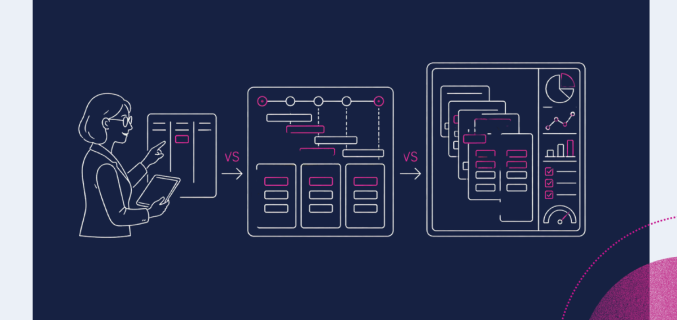
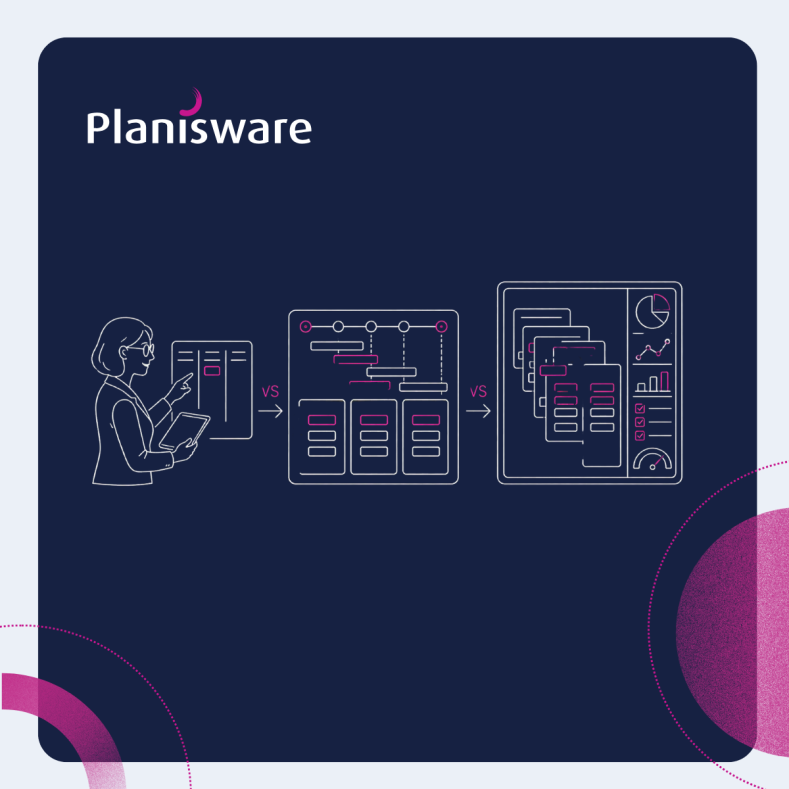
Project management, program management and portfolio management sound similar, yet they serve very different purposes. Anyone who wants to plan, prioritize and strategically steer projects successfully must clearly distinguish these levels. This article explains the definitions, goals and responsibilities of the 3 disciplines. It compares their functions and shows how organizations create lasting value through integrated project portfolio management (PPM).
Project Management Offices (PMOs) play a pivotal role in translating organizational strategy into successful project outcomes. Yet even well-equipped PMOs often struggle to achieve consistent results.
For enterprises navigating digital transformation, agile roadmap tools have become a cornerstone of strategic execution. These platforms help organizations align long-term business goals with iterative delivery cycles, offering the visibility and adaptability leaders need in a volatile market.
This expert guide ranks leading PPM tools for 2026 capacity planning, explaining how platforms like Planisware, Celoxis, Forecast.app, Wrike, Prism PPM, Profit.co, and Asana support forecasting, scenario modeling, and AI-driven, data‑driven portfolio decisions.
Explore the top 6 AI-enabled SPM vendors for 2026, comparing forecasting, integrations, governance, and suitability for mid-market and enterprise needs.
Every organization sets out with an ambitious vision, yet most strategies never translate into meaningful results. The reason is rarely poor planning: it is poor execution.
Agile resource and capacity management platforms have become essential for organizations that must continuously realign teams, budgets and priorities in rapidly changing markets. These systems help enterprises dynamically balance people, skills and financial resources against evolving portfolios of agile initiatives.












![[Illustration] Resource Optimization FR](/sites/default/files/styles/media_large/public/2026-07/optimisation-ressources-ligne.png?h=197483aa&itok=LDDC4C_n)
![[Illustration] Resource Optimization FR](/sites/default/files/styles/max_789_x789/public/2026-07/optimisation-ressources-ligne.png?h=197483aa&itok=AQGTRvJ9)
![[Thumbnail] Acteur dans le marché](/sites/default/files/styles/media_large/public/2026-07/acteur-marche-ligne-continue.png?h=197483aa&itok=fscpmfUG)
![[Thumbnail] Acteur dans le marché](/sites/default/files/styles/max_789_x789/public/2026-07/acteur-marche-ligne-continue.png?h=197483aa&itok=7zBQzsN0)


![PMO Reporting [illustration]](/sites/default/files/styles/media_large/public/2026-07/pmo-reporting-line-illustration.png?h=197483aa&itok=GkW3SeIa)
![PMO Reporting [illustration]](/sites/default/files/styles/max_789_x789/public/2026-07/pmo-reporting-line-illustration.png?h=197483aa&itok=rPNg-7Sh)






![[Illustration] Capacity Planning Article](/sites/default/files/styles/media_large/public/2026-07/capacity-planning-line-art.png?h=197483aa&itok=9Hub-dK7)
![[Illustration] Capacity Planning Article](/sites/default/files/styles/max_789_x789/public/2026-07/capacity-planning-line-art.png?h=197483aa&itok=DYHdwZJD)