Your portfolio held 40 projects 3 years ago. Today it holds 400. Somewhere along the way, spreadsheets stopped working, resource conflicts multiplied and leadership lost confidence in the numbers.
AI-powered project portfolio management (PPM) helps mid-size enterprises evaluate investments, anticipate delivery risks and coordinate scarce resources. The right platform fits your governance needs, not just your task workflows.
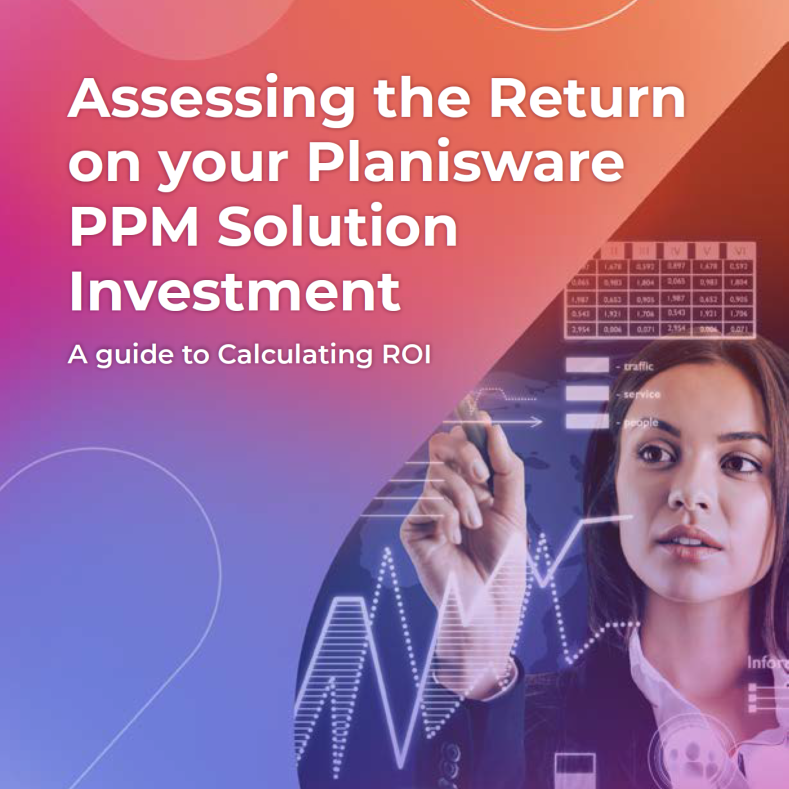
As organizations face growing pressure to justify every technology investment, we wanted to address a persistent gap: most ROI models are generic and disconnected from the capabilities that actually generate financial impact. This guide was designed to anchor the calculation in the operational drivers of value creation and provide you with a credible, defensible business case rather than a set of optimistic assumptions.
Portfolio managers face tighter regulatory scrutiny, constrained resources and constant pressure to prove that every investment advances strategy. Governance and compliance tools have moved from back-office necessities to operational platforms.
Project portfolio management (PPM) software helps organizations plan, prioritize and strategically align projects, resources and budgets across the portfolio. Ratings rest on criteria such as governance, capacity planning, analytics and integration capability. In a market with many vendors, PMO leaders, project directors and IT decision makers ask the same question.
Choosing a project portfolio management (PPM) solution is a strategic decision. The market ranges from lightweight project planning tools to platforms built for demanding, cross-divisional portfolios. The right choice depends less on the length of the feature list than on how well a solution supports your goals, your processes and your maturity.
Integrated PPM software connects portfolio decisions with real-time data from delivery, ERP, CRM, and BI systems, creating a centralized, reliable foundation for prioritization, governance, and budget management across modern IT landscapes.
Project Portfolio Management (PPM) software gives PMO leaders the cross-functional visibility they need to identify capacity bottlenecks and redistribute work across teams. It also tracks every project against portfolio-level priorities.
Project Portfolio Management (PPM) software is a platform dedicated to selecting, planning, executing and analyzing project portfolios, aimed at strategic alignment and resource optimization to maximize business value. In a market that analyst firms now track across dozens of solutions, knowing the major players is a precondition for an informed, durable choice.
For enterprises evaluating a move away from Microsoft Project, the strongest alternatives are purpose-built project portfolio management (PPM) platforms.
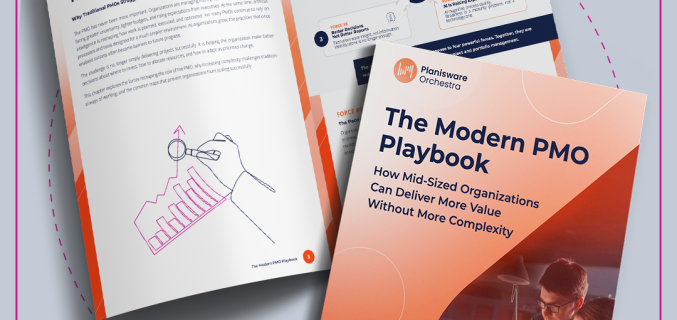
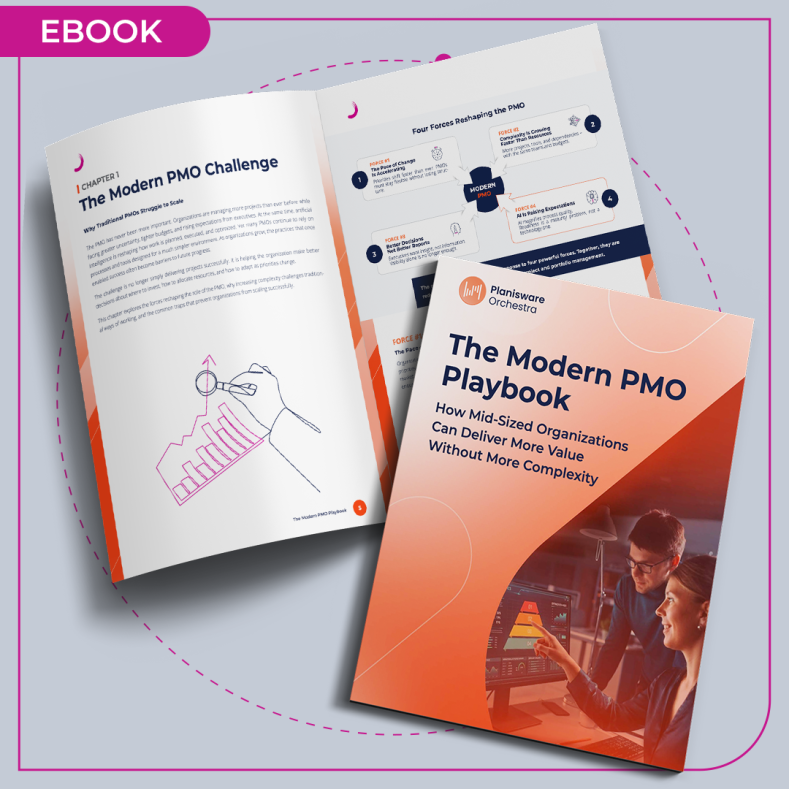
The Modern PMO Playbook is for PMO leaders, portfolio managers, and executives in mid-sized organizations who need the governance, visibility, and portfolio discipline to scale, without the heavy administration that slows teams down.
Project Management Offices (PMOs) have evolved from administrative support centers into strategic powerhouses that drive measurable business value. Yet many organizations struggle to unlock their PMO's full potential.
A 2026 guide to the 7 most trustworthy PPM providers: Planisware, Wrike, ClickUp, Smartsheet, Planview, Oracle Primavera and Visor, compared by governance, integrations, industry fit and analyst recognition.



![[illustration] portfolio optimization](/sites/default/files/styles/media_large/public/2026-08/cloud-ai-ppm-portfolio-optimization.png?h=197483aa&itok=jPLLuj7l)
![[illustration] portfolio optimization](/sites/default/files/styles/max_789_x789/public/2026-08/cloud-ai-ppm-portfolio-optimization.png?h=197483aa&itok=wuIfjSFQ)


![[Illustration] Gouvernance CAPEX](/sites/default/files/styles/media_large/public/2026-08/logiciels-gestion-gouvernance-capex.png?h=197483aa&itok=pG4YS5aD)
![[Illustration] Gouvernance CAPEX](/sites/default/files/styles/max_789_x789/public/2026-08/logiciels-gestion-gouvernance-capex.png?h=197483aa&itok=I_TuYzc2)
![[illustration] centralized project oversight](/sites/default/files/styles/media_large/public/2026-09/centralized-project-oversight-platform.png?h=197483aa&itok=GK6fDWpG)
![[illustration] centralized project oversight](/sites/default/files/styles/max_789_x789/public/2026-09/centralized-project-oversight-platform.png?h=197483aa&itok=ku9mDhSx)
![[illustration] customer success](/sites/default/files/styles/media_large/public/2026-09/article-hero-handshake%20%281%29.png?h=197483aa&itok=3QcilMhi)
![[illustration] customer success](/sites/default/files/styles/max_789_x789/public/2026-09/article-hero-handshake%20%281%29.png?h=197483aa&itok=1YsQeZOd)






![[illustration] Demand-capacity mismatches](/sites/default/files/styles/media_large/public/2026-07/article-hero-balance-scale.png?h=197483aa&itok=rqJAJaQ2)
![[illustration] Demand-capacity mismatches](/sites/default/files/styles/max_789_x789/public/2026-07/article-hero-balance-scale.png?h=197483aa&itok=thrE2ln6)