Enable executives and PMOs to prioritize the right initiatives, optimize funding, and continuously adapt strategy with confidence.
Enable executives and PMOs to prioritize the right initiatives, optimize funding, and continuously adapt strategy with confidence.

Planisware supports strategic planning across thousands of initiatives, multiple business units, and global financial structures - without simplifying trade-offs or hiding constraints.
Planisware goes beyond visualization with embedded scenario simulation and portfolio optimization, enabling teams to test funding, capacity, and strategic trade-offs before committing resources.
Planisware continuously connects strategy, portfolios, programs, and delivery in one solution - keeping investment decisions aligned as priorities change.
![[Enterprise][25Q3] AI Risk Generation](/sites/default/files/styles/call_out/public/2025-11/%5BEnterprise%5D%5B25Q3%5D%20AI%20Risk%20Generation.png?itok=tymo-tFA)
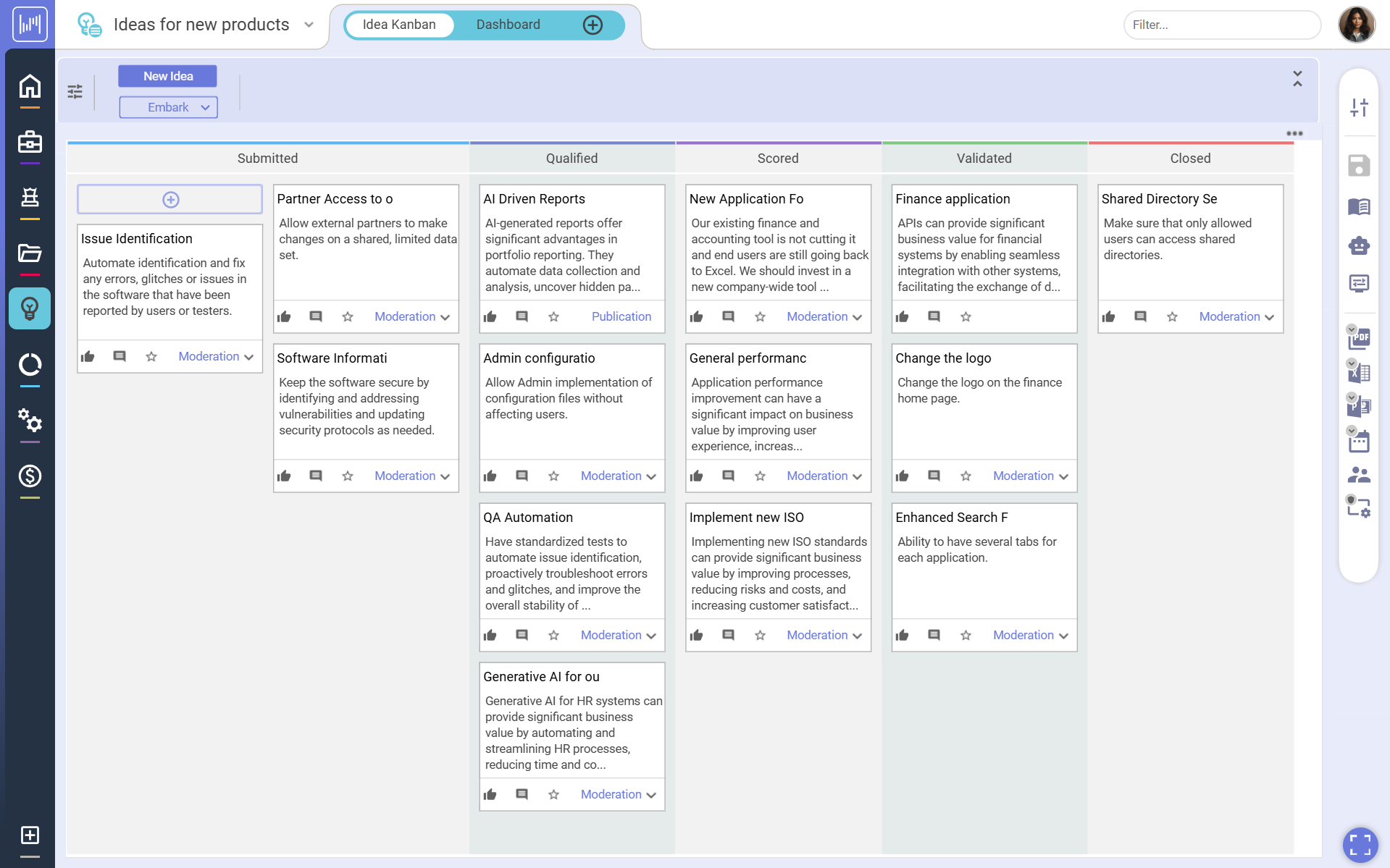
Begin by translating high-level strategy into tangible roadmaps. Visualise strategic themes, investment horizons, OKRs, key market opportunities and milestones. Then capture the demand flood: ideas, innovations, business cases, proposals - all funnelled through an intake process.
Behind the scenes, built-in AI agents can detect intake patterns, and recommend which opportunities align most strongly with your objectives.
![[Enterprise][25Q3] Strategic Goals](/sites/default/files/2025-11/%5BEnterprise%5D%5B25Q3%5D%20Strategic%20Goals.png)
Strategy is only as good as its execution. Balance your portfolio of initiatives against available capacity, budget and skills. Prioritise work not just by intuition, but using quantitative scoring, strategic weightings, and scenario comparisons.
Stop relying on siloed spreadsheets. Leverage Planisware’s integrated demand-to-delivery pipeline to ensure every investment reflects your strategic intent and resource reality.
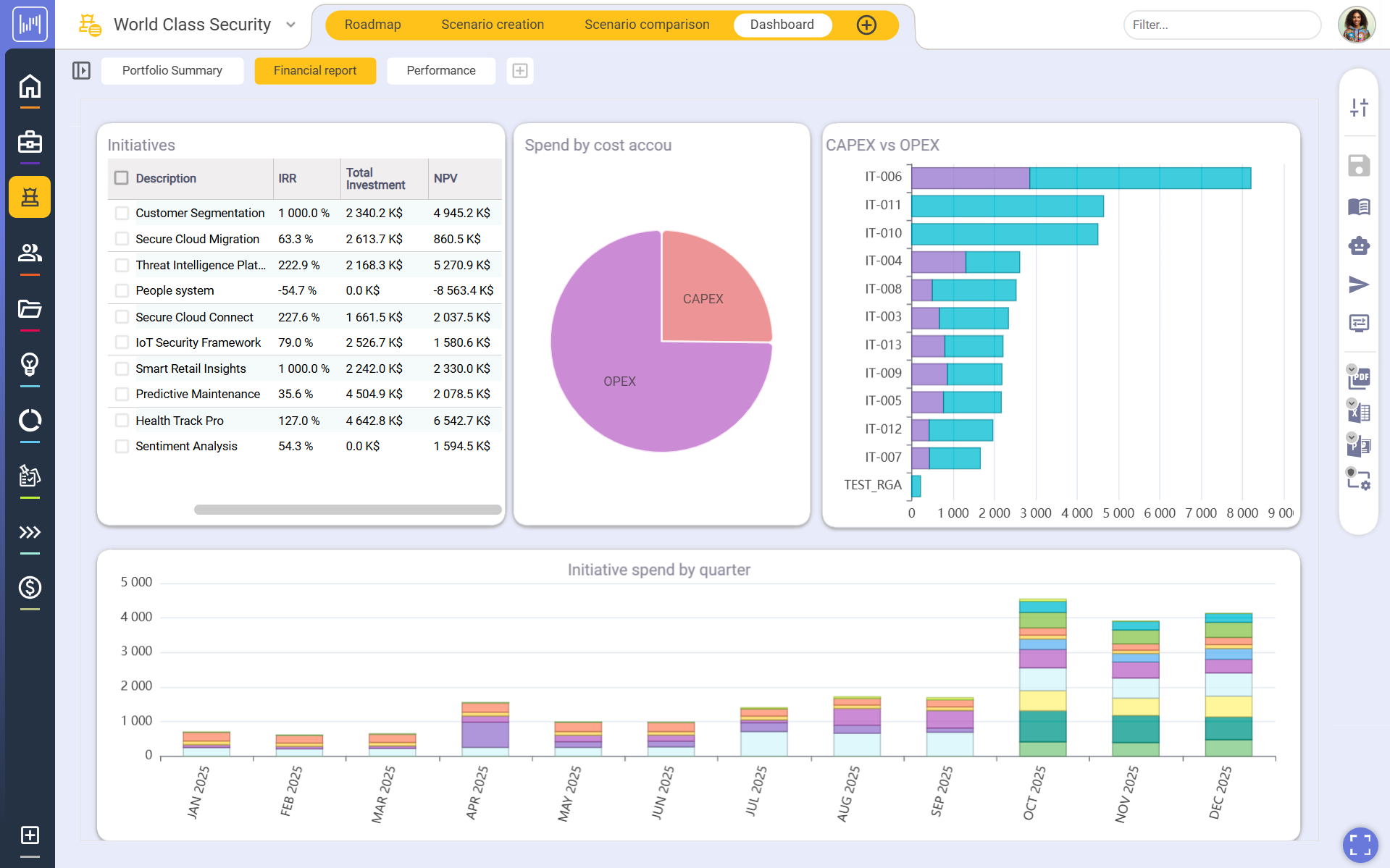
Create adaptive funding models and detailed capacity forecasts that link your roadmap to the numbers. Model cash-flows, cost impacts, resource utilisation and timeline constraints - all in one unified platform.
With our AI-powered forecasting, you gain early warning of cost slippage, resource bottlenecks or timeline risk, turning historical performance into future foresight.
In an age of disruption, you must prepare for “what if”, not just “what is”. Build multiple strategic scenarios: re-allocate budget, test delayed launches, shift resources, change market assumptions and immediately see the impact on value, risk, capacity and timeline.
Our intelligent optimiser uses swarm-based intelligence to propose optimal project mixes and resource allocations at portfolio scale, giving you confidence in your choices
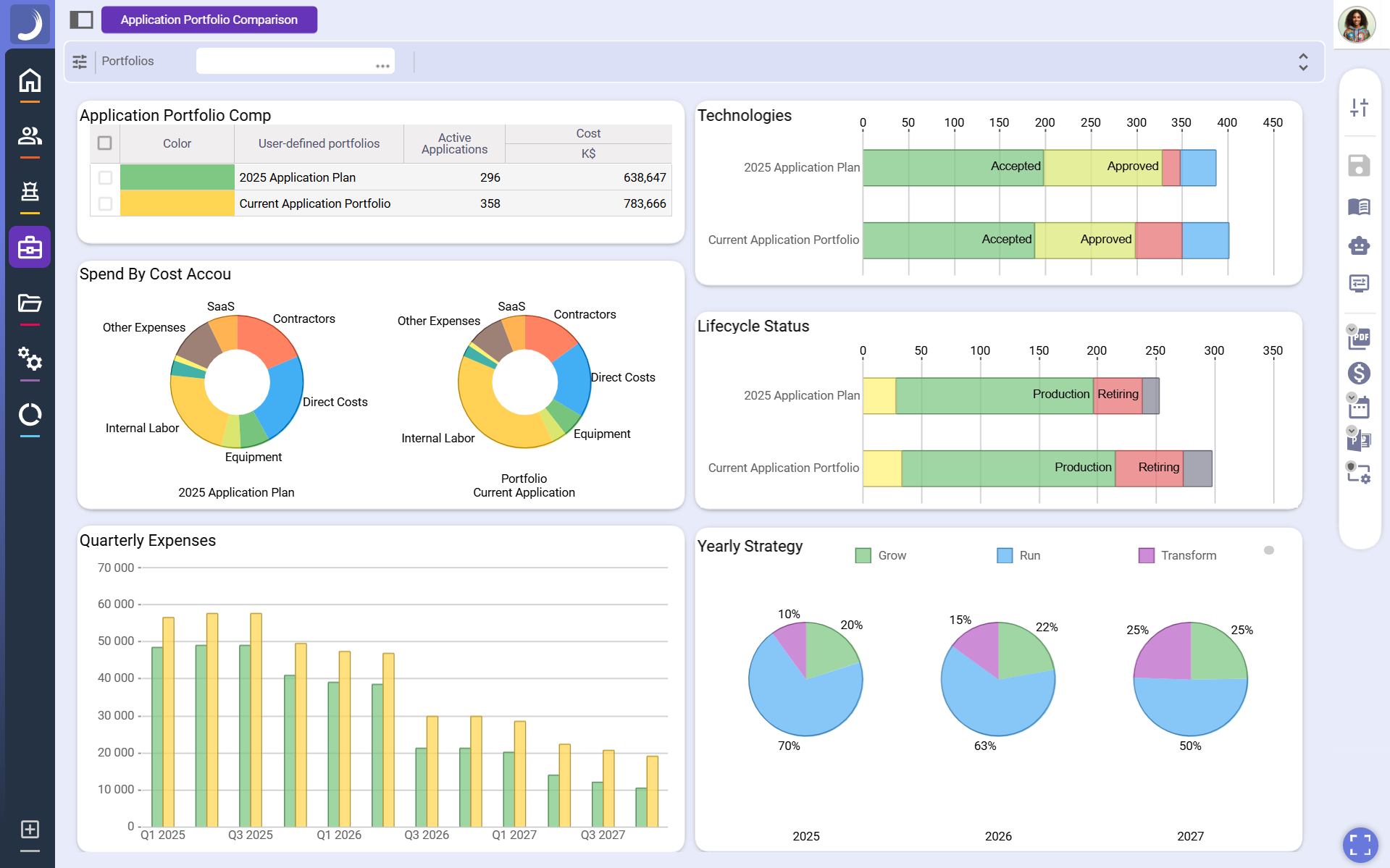
![[Enterprise][25Q3] Portfolio Comparison Dashbaord](/sites/default/files/2026-02/Enterprise%2025Q3%20Portfolio%20Comparison%20Dashbaord.png)
From board-room visuals to PMO dashboards, turn data into insight.
Planisware provides an extensive set of dashboards and analytics out of the box. But when you need to monitor insights, Planisware Explorer allows users to create additional reports with an extra layer of flexibility.
For external reporting that combines Planisware data with third-party information, the platform leverages BI-Box, a cube generator for connecting with other Business Intelligence solutions.