Project delays rarely announce themselves. They build quietly: an approval that lingers, a dependency nobody noticed, a specialist stretched across too many initiatives. By the time these issues reach a status meeting, the damage is already moving through the schedule.
The best project management methodology for UK teams depends on requirements stability, delivery risk and stakeholder needs. Waterfall supports predictable work; Agile supports learning through incremental delivery. PRINCE2 adds structured governance, while hybrid approaches combine controls with adaptable execution. Confirm resource availability before committing to deadlines, whichever approach you choose.
Enterprise project controls is the discipline of integrating cost, schedule, risk and resource data across a portfolio of projects. It gives program and enterprise leaders traceable governance, real-time reporting and data-driven decisions.
Pharma R&D pipelines are growing more demanding. Budgets face closer scrutiny at every review. Each decision to fund, accelerate or terminate an asset lands on clinical, regulatory, CMC and commercial teams at once.
When every request is marked urgent, work management restores order in 3 moves. It routes all incoming work through 1 intake process. It scores that work against shared criteria, then tests the ranked result against real capacity. Priority becomes a decision the organisation makes once, with evidence, rather than a negotiation each team repeats.
Scaling project management across large teams requires an enterprise platform that centralizes portfolio visibility, resource capacity planning and financial governance in one environment.
Organizations increasingly struggle to align skilled teams with strategic priorities while maintaining agility. An integrated agile resource management solution answers that challenge.
Work prioritization across teams aligns scarce time, skills and budget with the outcomes that matter most. It replaces ad hoc competition for resources with transparent, deliberate trade-offs across departments.
This article shows you how to align teams with strategic objectives, track progress using KPIs and OKRs, and connect strategy to execution with clear ownership.
Modern organizations depend on coordinated collaboration across diverse teams to deliver large-scale programs on time and within scope. Yet organizational silos persist, separating departments and isolating information.
Agile sprint planning has evolved from a simple team exercise into a cornerstone of cross-departmental coordination. With distributed workforces, hybrid teams and enterprise-level dependencies, organizations now rely on digital tools to do more than plan sprints. These platforms synchronize strategies, automate workflows and visualize progress across business and IT. Choosing the right one can make the difference between fragmented execution and cohesive delivery.
Coordinating work across multiple Agile teams can feel like balancing many moving parts at once. Dependencies are the connections between tasks, teams or systems. They can slow delivery, introduce risk and obscure progress. Managing them well is one of the toughest challenges in enterprise Agile planning.
In large organizations, coordinating several Agile teams demands more than synchronized sprints: it requires visibility, consistency and alignment around outcomes. Tracking Agile metrics across multiple teams helps leaders connect day-to-day delivery with strategic goals such as faster time-to-market or improved customer satisfaction.
This article outlines ten proven ways to enhance communication and team alignment, combining human best practices with digital tools that simplify coordination. Whether managing a product launch, IT rollout or R&D initiative, these steps help ensure every stakeholder stays informed, engaged and aligned from strategy to execution.
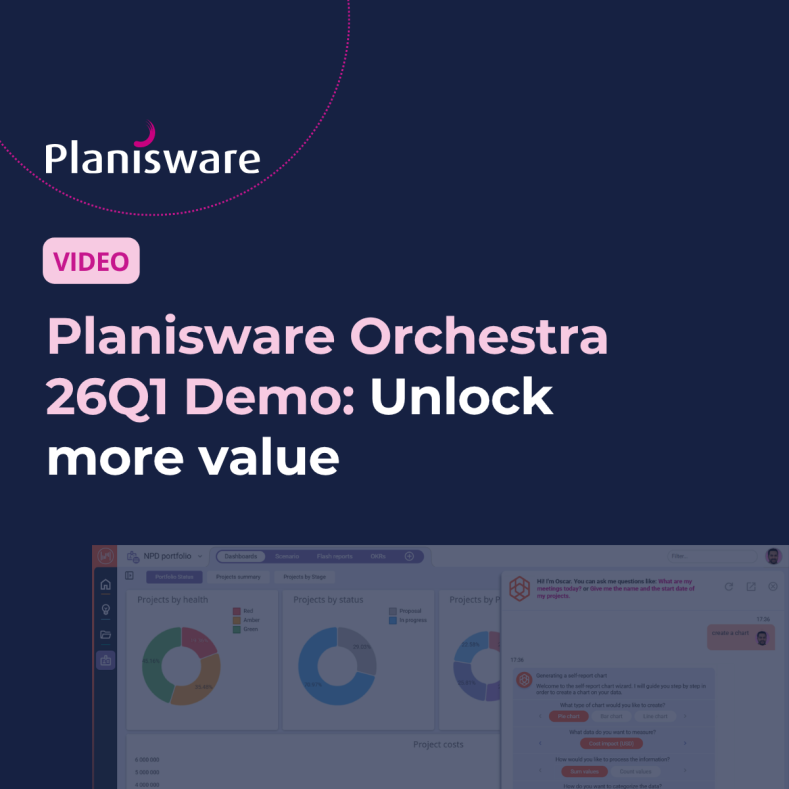
Building on the simplicity you already know, this release introduces greater flexibility, deeper capabilities, and powerful AI assistance across the platform.
Tracking agile value delivery across multiple teams requires defining outcomes (not just outputs), selecting three to six metrics across team, program and portfolio layers, assigning clear data ownership, standardizing taxonomy, and establishing a lightweight governance cadence. Organizations that connect OKRs to flow metrics and use an integrated platform consistently report stronger alignment between agile programs and business strategy.
Efficient daily operations are the foundation of every successful business. Yet many organisations still manage routine work through fragmented tools and manual updates, making it difficult to see what is happening in real time. Streamlining operational workflows and gaining live visibility into team activity improves decision speed, data accuracy, and accountability.
In large organisations, visibility across Agile teams is often hindered by fragmented tools, inconsistent workflows and scattered data. A unified platform changes that dynamic by connecting strategy, execution and visibility in one place. This approach allows leaders to see how every sprint, release and value stream contributes to organisational goals without forcing teams into rigid moulds.




![[illustration] Enterprise PMOs](/sites/default/files/styles/media_large/public/2026-09/top-ppm-vendors-for-enterprise-pmos.png?h=197483aa&itok=j7VOszH4)
![[illustration] Enterprise PMOs](/sites/default/files/styles/max_789_x789/public/2026-09/top-ppm-vendors-for-enterprise-pmos.png?h=197483aa&itok=Xg4zhqUQ)




![[illustration] strategic objectives, track progress using KPIs and OKRs](/sites/default/files/styles/media_large/public/2026-07/strategic-objectives-kpis-okrs_0.png?h=197483aa&itok=cHHK6qwe)
![[illustration] strategic objectives, track progress using KPIs and OKRs](/sites/default/files/styles/max_789_x789/public/2026-07/strategic-objectives-kpis-okrs_0.png?h=197483aa&itok=vZI1wzV-)