Professional Services Automation (PSA) software unifies project management, time tracking, resource scheduling, billing and financial management in 1 platform built for client-facing services firms.
We sat down with Harry Snoxell, Program Planning & Operations Senior Manager at Wisk Aero, to hear how the company building a fully autonomous air taxi outgrew Microsoft Project, what changed once Planisware became the heartbeat of the program, and why the AI worth having is the AI you can use today.
Compare the best PPM tools for earned value management, financial analytics and capacity planning. Learn how portfolio budgeting, cost tracking and forecasting improve visibility, reduce risk and support smarter investment decisions.
Enterprise PMOs that govern multi-year investments and balance competing priorities need more than project tracking. They need decision support for investment and capital allocation.
Pharma R&D pipelines are growing more demanding. Budgets face closer scrutiny at every review. Each decision to fund, accelerate or terminate an asset lands on clinical, regulatory, CMC and commercial teams at once.
This guide explains how to build a repeatable budget allocation process, from setting strategic criteria and comparing business cases to modelling scenarios, governing reallocations and tracking portfolio value.
Large UK enterprises managing multi-site, cross-functional portfolios need a platform that enforces financial governance. They also need to balance resource capacity and align every investment to strategy. MarketsandMarkets values the global PPM market at 9.91 billion dollars in 2026, rising to 16.87 billion dollars by 2031.
Capital projects in engineering, construction, energy, aerospace and defense rank among the most demanding undertakings an organization can pursue. The stakes are high.
Enterprises running hundreds or thousands of concurrent projects face one persistent challenge. They need project cost management, scheduling and financial visibility unified into a single trustworthy view.
Every organisation sets strategy. Far fewer execute it consistently. The gap between boardroom ambition and on-the-ground delivery remains one of the most persistent challenges in enterprise leadership. Strategic Portfolio Management (SPM) exists to close that gap.
Choosing a cloud-based AI Project Portfolio Management (PPM) platform is one of the more consequential decisions a PMO leader makes. Cloud deployment now dominates new PPM investment, and every major vendor markets an AI story.
Some organizations steer several hundred projects at once, prioritize investments worth millions and coordinate strategic goals across departments. For them, the choice of project management software is not a licensing decision. It is a strategic one. Enterprise platforms for project portfolio management (PPM) differ fundamentally from tools built for team tasks or smaller project environments.
The best PPM and SPM tools for user adoption programmes provide 4 things. They deliver role-based training mapped to real job tasks and in-product guidance that teaches inside the live workflow. They add executive enablement so leaders run portfolio reviews in the platform. They also provide usage analytics that show where adoption is slipping. Capability alone does not create adoption.
AI-native strategic portfolio management (SPM) software embeds predictive, prescriptive and explainable artificial intelligence directly into portfolio decision workflows. It connects strategic objectives to portfolios, value streams, programmes and products, so organisations forecast, prioritise and act faster. This comparison evaluates the leading AI-native SPM platforms across the 5 dimensions that matter most to enterprise PMO leaders, portfolio directors and CIOs in 2026.
Project portfolio management (PPM) software helps organizations plan, prioritize and strategically align projects, resources and budgets across the portfolio. Ratings rest on criteria such as governance, capacity planning, analytics and integration capability. In a market with many vendors, PMO leaders, project directors and IT decision makers ask the same question.
Strategic portfolio management software connects corporate goals with the project portfolio. It shows which initiatives receive funding, how budgets and capacity are distributed and what each investment contributes to the strategy. For global enterprises, this selection determines portfolio transparency, steering capability and investment quality for several years.
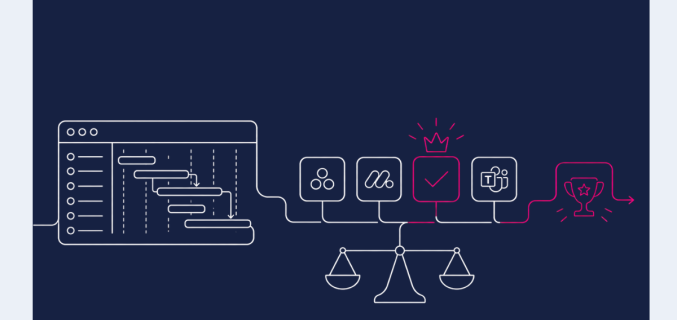
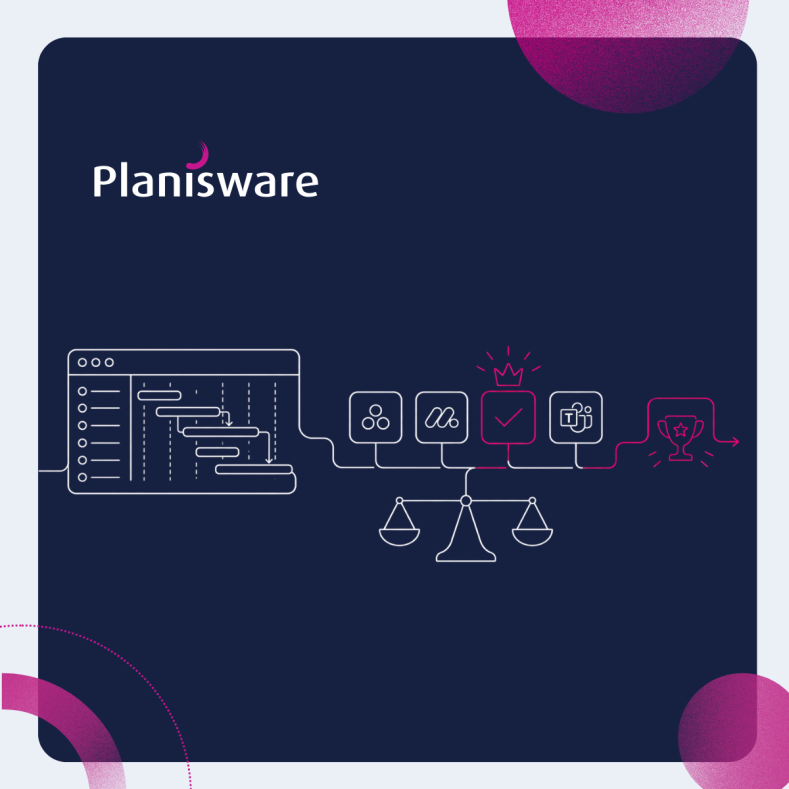
This article compares Asset Investment Planning (AIP) solutions for utility companies, focusing on how they support CAPEX reconciliation, investment governance, portfolio prioritization, and vendor-specific capabilities. It helps utility leaders evaluate the features needed to connect strategic investment plans with financial controls, regulatory requirements, and reliable capital-delivery decisions.
Choosing a project portfolio management (PPM) solution is a strategic decision. The market ranges from lightweight project planning tools to platforms built for demanding, cross-divisional portfolios. The right choice depends less on the length of the feature list than on how well a solution supports your goals, your processes and your maturity.

![[Illustration] Gouvernance CAPEX](/sites/default/files/styles/media_large/public/2026-08/logiciels-gestion-gouvernance-capex.png?h=197483aa&itok=269-JPhw)
![[Illustration] Gouvernance CAPEX](/sites/default/files/styles/max_789_x789/public/2026-08/logiciels-gestion-gouvernance-capex.png?h=197483aa&itok=JswDegOt)


![[illustration] earned value management article](/sites/default/files/styles/media_large/public/2026-09/article-hero-financial-gauge.png?h=197483aa&itok=wp5aouTU)
![[illustration] earned value management article](/sites/default/files/styles/max_789_x789/public/2026-09/article-hero-financial-gauge.png?h=197483aa&itok=IhVzQDOy)








![[illustration] ROI dashboard](/sites/default/files/styles/media_large/public/2026-07/roi-dashboard-oneline.png?h=197483aa&itok=4IO6qOIY)
![[illustration] ROI dashboard](/sites/default/files/styles/max_789_x789/public/2026-07/roi-dashboard-oneline.png?h=197483aa&itok=YleCWRiH)


![[illustration] portfolio optimization](/sites/default/files/styles/media_large/public/2026-08/cloud-ai-ppm-portfolio-optimization.png?h=197483aa&itok=5FjsoWVE)
![[illustration] portfolio optimization](/sites/default/files/styles/max_789_x789/public/2026-08/cloud-ai-ppm-portfolio-optimization.png?h=197483aa&itok=NGBb1JbZ)










![[Illustration] Capex Reconciliation](/sites/default/files/styles/media_large/public/2026-08/comparing-aip-solutions-for-utility-capex-reconciliation.png?h=197483aa&itok=KkUfVzM3)
![[Illustration] Capex Reconciliation](/sites/default/files/styles/max_789_x789/public/2026-08/comparing-aip-solutions-for-utility-capex-reconciliation.png?h=197483aa&itok=aT7sWqv2)