Compare the best PPM tools for earned value management, financial analytics and capacity planning. Learn how portfolio budgeting, cost tracking and forecasting improve visibility, reduce risk and support smarter investment decisions.
Pharma R&D pipelines are growing more demanding. Budgets face closer scrutiny at every review. Each decision to fund, accelerate or terminate an asset lands on clinical, regulatory, CMC and commercial teams at once.
The right capacity planning software helps organizations use resources efficiently and identify bottlenecks early. Modern solutions combine capacity planning with AI and real-time analytics. This comparison presents the leading tools for 2026 and helps you choose the solution that best fits your needs.
Learn root causes of demand-capacity mismatches, how to centralize intake, track skills-based capacity, enable governance, and monitor portfolio performance.
This guide shows in 8 steps how organizations realistically calculate the resource and capacity needs of their project portfolio: from standardized intake of work requests to building a resource inventory, through top-down and bottom-up estimates.
Most project delays do not start with a missed deadline. They start weeks earlier, when demand quietly outgrows the capacity available to deliver it. Workload balancing is the discipline that closes that gap.
Strategic Portfolio Management (SPM) tools with capacity planning are platforms that align projects, resources and investments with strategy while forecasting workforce availability against demand. They unify staffing, timesheets and financials in a single model, replacing spreadsheets with connected planning. Leaders gain real-time visibility into utilization, forecast accuracy and the cost of every staffing decision.
Managing service engagements efficiently requires more than coordination—it demands visibility, predictability and adaptability across a dynamic portfolio of commitments. Many organisations struggle with disconnected systems and manual processes that obscure inefficiencies.
Balancing multiple projects across teams can quickly become a challenge without the right support. Today’s organizations need clarity into team capacity, real-time project visibility and automation that keeps workloads balanced and deliverables on track.
Modern project delivery lives or dies by how well you match scarce skills to strategic priorities. This guide explains what project resource management is, which tools help allocate and balance resources across projects, and how to select and roll out a platform that scales. Whether you run a PMO or a product organization, you’ll learn the core capabilities to look for—central resource pools, real-time utilization views, timesheets tied to financials, and scenario planning—plus how AI is changing the game. We also quantify impact with real-world results and offer an implementation roadmap shaped by Planisware’s enterprise PPM experience.
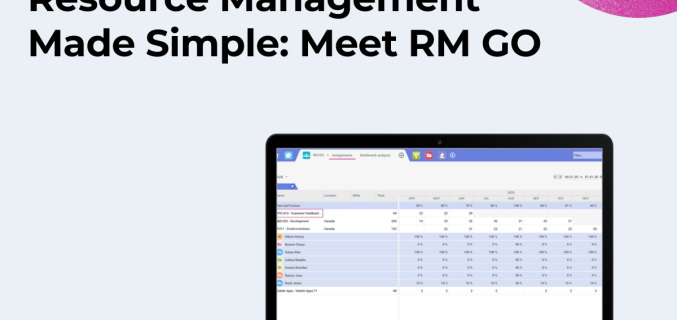
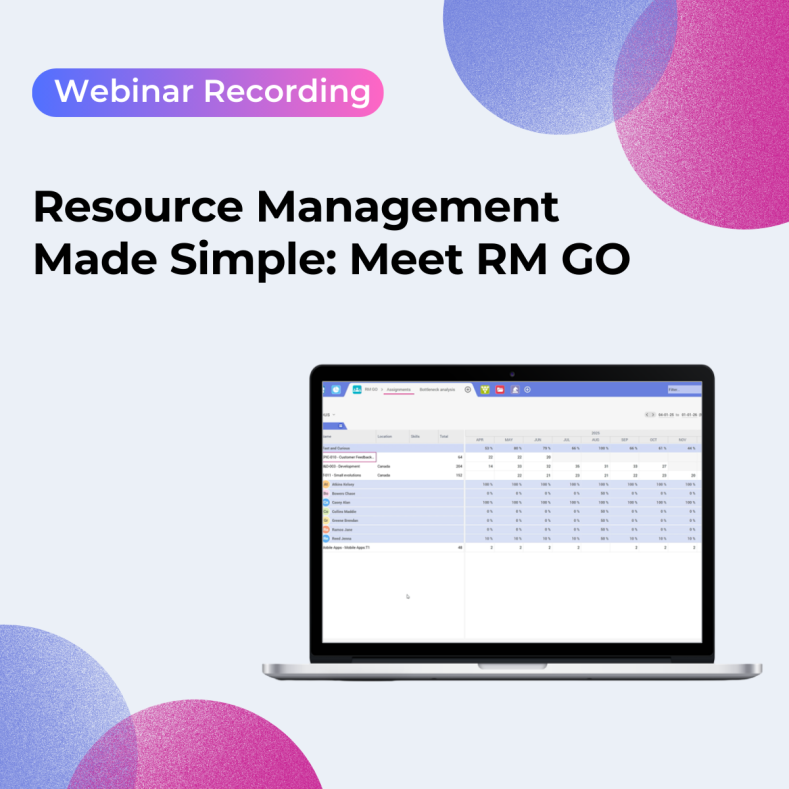
In this 30-minute recording, we’ll walk through a more flexible, streamlined approach to resource planning: one that helps teams respond faster, reduce overallocations and burnout, and stay aligned as priorities evolve.
Discover how Yole Group, a global leader in semiconductor market intelligence, replaced Excel-based planning with Planisware Orchestra to gain visibility, balance consulting and report delivery, improve profitability, and build a culture of structured, people-centric project management.
At the heart of resource optimization is resource allocation, which involves the strategic assignment of human capital, financial resources, equipment, and time to project tasks.
Reducing waste in projects, specifically in the aspects concerned with resource allocation, enables you to focus on activities that bring more value to your customers and business.
Saint-Gobain R&D teams working for the construction businesses as well as the Corporate Innovation team needed a system to replace obsolete in-house developed tools that were difficult to maintain and were seen as not user friendly. This new system would be an opportunity to unify its R&D processes while respecting business specificities, allowing later rollout to other R&D entities or functions (global engineering, marketing, …). Saint-Gobain turned to Planisware in 2018 to help integrate its innovation management and drive efficiency.



![[illustration] earned value management article](/sites/default/files/styles/media_large/public/2026-09/article-hero-financial-gauge.png?h=197483aa&itok=wp5aouTU)
![[illustration] earned value management article](/sites/default/files/styles/max_789_x789/public/2026-09/article-hero-financial-gauge.png?h=197483aa&itok=IhVzQDOy)


![[illustration] Demand-capacity mismatches](/sites/default/files/styles/media_large/public/2026-07/article-hero-balance-scale.png?h=197483aa&itok=RCnXm-6B)
![[illustration] Demand-capacity mismatches](/sites/default/files/styles/max_789_x789/public/2026-07/article-hero-balance-scale.png?h=197483aa&itok=kyddm5KM)