Selecting the right OKR platform can transform how an organization connects strategy to execution. The goal is not simply to track objectives and key results, but to embed them in the daily rhythm of teams so that they directly influence decisions, resource allocation and long-term business outcomes.
The most effective platforms create transparency across portfolios, automate progress updates and provide real-time insight into how every initiative supports strategic intent. This guide outlines a structured approach to evaluating and selecting OKR and strategy execution software that enables enterprise-wide alignment.
Define Strategic Outcomes and Stakeholder Needs
Every effective OKR platform evaluation begins with clarity: what outcomes must the organization achieve, and who will use the system? Start by identifying the strategic priorities the platform must advance — whether growth, innovation, reliability or efficiency. Then map these priorities to stakeholder groups such as executives, PMO leaders, product teams, HR and finance.
Documenting stakeholder needs ensures that OKRs map naturally to daily workflows. For example, executives may prioritize high-level dashboards, while project managers need simple task linkage and timely updates. A concise requirements summary clarifies objectives, stakeholder roles and reporting expectations, providing a foundation for meaningful comparisons and reducing the risk of misalignment.
Map OKR Workflows to Daily Operations
A platform’s value lies in how effectively OKRs integrate with daily work. Mapping workflows begins with identifying where execution happens — in project boards, CRMs, sprint plans or meetings — and embedding OKRs there. This prevents the common separation of strategy from delivery.
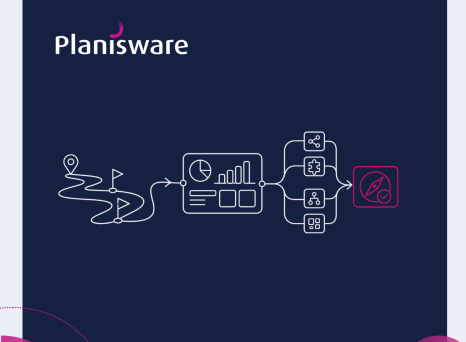
An OKR workflow defines how objectives and key results intersect with everyday tools and routines to reinforce accountability. Integrations with systems such as Jira, Asana or Microsoft Teams allow updates to sync automatically, eliminating double entry and encouraging adoption. Visualizing these intersections through workflow diagrams can reveal gaps and guide setup, ensuring that OKRs become active instruments of execution rather than static dashboards.
Evaluate Key Features for Strategy-Execution Alignment
A robust OKR platform connects top-down intent with bottom-up delivery data. Evaluating tools across five key capability areas helps ensure that alignment translates into measurable outcomes:
| Capability | Description |
|---|---|
| Alignment visualization | Clear mapping of company goals to team and individual OKRs. |
| Real-time progress tracking | Live dashboards reflecting execution status. |
| Workflow automation/integrations | Direct links with task and communication tools. |
| Enterprise scalability and security | Strong performance, data protection and governance. |
| AI-powered decision support | Predictive insights, risk detection and analytics. |
Using a scoring matrix across these dimensions keeps the platform evaluation anchored to strategic needs and operational workflows. Planisware, for example, unifies these capabilities within its Strategic Portfolio Management environment, ensuring that OKRs remain traceable to measurable business outcomes.
Visual Alignment and Cascading OKRs
Visual OKR alignment enables every contributor to see how their work supports company goals. Cascading OKRs translate enterprise objectives into team and individual targets that collectively drive strategy forward. Tools offering interactive strategy maps or dashboards help visualize this chain of contribution, building organizational transparency and engagement.
Effective visualization turns strategy into a continuous conversation. Dashboards and alignment maps make ownership explicit, allowing leaders to identify disconnects early and strengthen accountability across functions.
Real-Time Progress Tracking and Automated Updates
Static reports lose relevance quickly. Real-time OKR tracking ensures that changes in project or task status instantly update the linked objective, giving leaders a live view of progress. Automated dashboards and reminders promote consistent check-ins without manual effort.
| Tracking Approach | Pros | Cons |
|---|---|---|
| Manual updates | Easy to start | Prone to delay and error |
| Automated tracking | Real-time accuracy, lower admin load | Requires reliable integrations |
Real-time visibility fosters trust in data, an essential condition for fast, fact-based decisions. In Planisware, these live connections extend directly from project and portfolio data, preserving a Single Source of Truth.
Integrations and Workflow Automation
Integrations and automation determine how naturally OKRs fit into team operations. Prioritize platforms that connect to core systems such as Jira, Slack, Outlook and CRM tools so teams can update or view OKRs without switching contexts.
Workflow automation — automating reminders, alerts or escalations — further reduces administrative effort. Common integration categories include project management systems, communication platforms and productivity suites. Embedding OKRs in these daily workflows maintains a direct connection between planning and execution.
Planisware supports this by aligning OKRs with portfolio milestones and resource plans, enabling insight that extends beyond task-level data.
Enterprise Scalability and Security
As OKR adoption expands, enterprise-grade requirements become non-negotiable. A secure platform should support SOC 2 compliance, encryption, multi-tenancy and detailed audit logs. Role-based permissions protect access to sensitive objectives and governance settings.
A comparison framework can clarify vendor readiness:
| Security Feature | Enterprise Value |
|---|---|
| Role-based access | Protects confidential goals |
| Audit trails | Ensures accountability |
| Encryption in transit and at rest | Safeguards sensitive data |
| Multi-tenant architecture | Supports distributed organizations |
Security and scalability underpin reliable strategy execution. Planisware’s single-tenant cloud infrastructure and strict governance controls deliver the Granular Data Control and Ironclad Security large enterprises demand.
AI-Enabled Insights and Risk Detection
AI capabilities introduce predictive intelligence to OKR management. Modern platforms can suggest relevant objectives, detect risks and assess progress accuracy using past performance data. AI-enabled analysis scans signals such as delayed milestones or sentiment shifts to flag at-risk objectives early.
Once a solid OKR discipline is established, AI features accelerate maturity. Auto-generated key results, confidence scoring and re-prioritization recommendations make performance reviews more objective and timely. Planisware’s embedded AI builds on this concept, surfacing early indicators that help leaders adjust portfolios before issues escalate.
Pilot and Validate the OKR Platform
Before full deployment, validate the platform through a focused pilot. Start with one or two teams over a single quarter to test usability, engagement and integration performance under real conditions.
Measure pilot success through metrics such as adoption speed, data accuracy, participation in check-ins and user feedback. Structured pilot cycles — onboard, operate, review, adjust — help refine templates and governance before scaling to the wider organization.
Optimize Governance, Permissions and Reporting
As OKRs spread through the organization, governance ensures consistency and reliability. Align access levels with organizational hierarchies — for example, administrators managing setup, managers editing team OKRs and users updating progress. Role-based governance enhances clarity and compliance.
Develop standardized reports for executives, team leads and portfolio managers. Automated reporting templates and change logs improve reliability and reduce administrative burden. Within Planisware, these governance and reporting structures integrate directly with portfolio oversight, securing a unified strategic view.
Measure Success with Adoption Metrics and Business Outcomes
Platform success is determined not by the number of OKRs created but by visible improvements in engagement and performance. Track adoption rates, update consistency and business results associated with OKR progress.
| Metric | What It Measures | Why It Matters |
|---|---|---|
| Adoption rate | Active user participation | Reflects cultural integration |
| Check-in cadence | Frequency of updates | Maintains rhythm and accountability |
| Data accuracy | Reliability of inputs | Builds trust in decisions |
| OKR completion | Delivery against plan | Demonstrates execution effectiveness |
| Business KPI impact | Realized outcomes | Confirms strategic contribution |
These indicators transform system utilization data into actionable performance insight, aligning operational execution with strategic goals.
Best Practices for OKR Adoption and Change Management
Introducing OKRs is as much a people initiative as it is a process enhancement. Treat implementation as a strategic change effort. Leadership sponsorship, structured training and clear communication sustain adoption over time.
Embed regular OKR check-ins in existing operating rhythms, using consistent templates that limit unnecessary processes. Celebrate milestones and reinforce alignment through transparent progress dashboards. Continuous coaching and accessible learning resources nurture maturity.
Effective OKR change management makes strategic discipline habitual, ensuring decisions and outcomes stay aligned with organizational purpose. Planisware supports this evolution through scalable governance frameworks and AI-powered coaching insights.
Frequently Asked Questions
What resources can I consult for more information about choosing an OKR platform that bridges strategy and execution?
The following Planisware resources provide valuable context for organizations evaluating OKR platforms and strategic execution tools:
- The Definitive Guide to Aligning Projects With Corporate Goals — A comprehensive guide to connecting project portfolios with corporate strategy, directly relevant to embedding OKRs into execution workflows.
- Best Strategic Portfolio Management Software 2026 for Digital Service Delivery — An evaluation of leading SPM solutions for digital organizations, useful for benchmarking OKR platform capabilities against broader portfolio management needs.
- The Enterprise's Definitive Guide to Selecting a Digital Transformation Planning Platform — Guidance on platform selection for large-scale transformation initiatives, with criteria applicable to OKR tool evaluation.
- Planisware Horizon — IT Strategic Portfolio Management — Explore how Planisware Horizon integrates strategic objectives with IT investment decisions and portfolio alignment.
- Planisware Nova — SPM for Product Development — Learn how Planisware Nova connects innovation priorities and resource decisions to strategic outcomes across product portfolios.
- Planisware Enterprise — Business Transformation at Scale — Understand how enterprise-level budget, resource, and schedule integration supports OKR-driven execution at scale.
- Planisware Orchestra — Turnkey PPM Solution for PMOs — Discover how PMOs can streamline project decision-making and align team execution with strategic objectives.
- Planisware Resource Center — Browse the full library of Planisware insights, guides, and tools covering strategic planning, portfolio management, and execution alignment.
What is the difference between an OKR platform and a project portfolio management tool?
An OKR platform is designed to define, cascade, and track objectives and key results across an organization, while a project portfolio management (PPM) tool governs the planning, prioritization, and execution of the projects and programs meant to deliver those results. The critical distinction lies in scope: OKR platforms operate at the strategic intent layer, whereas PPM tools operate at the execution layer.
The most significant risk organizations face is treating these as separate systems. When OKRs live in one tool and project execution lives in another, the connection between strategic ambition and operational reality breaks down. Research consistently shows that organizations with tightly integrated strategy and execution frameworks outperform peers on key business metrics by a significant margin.
The most effective approach is to select platforms — or integrated solutions — that allow OKRs to directly influence resource allocation, portfolio prioritization, and project decision-making in a single workflow. Solutions like Planisware Horizon and Planisware Nova are designed precisely to close this gap, embedding strategic objectives into the daily rhythm of portfolio and program management rather than treating them as a parallel reporting exercise.
For a deeper exploration of how project alignment supports corporate goals, see The Definitive Guide to Aligning Projects With Corporate Goals.
What are the most important features to evaluate when choosing an OKR platform for a large enterprise?
For enterprise organizations, the most important OKR platform features extend well beyond basic goal tracking. The platform must support multi-level alignment, cross-functional dependencies, and integration with existing planning and execution systems.
Key capabilities to evaluate include:
| Capability | Why It Matters at Enterprise Scale |
|---|---|
| Cascading alignment | Ensures corporate OKRs translate meaningfully to business unit, team, and individual levels without losing strategic intent |
| Portfolio integration | Connects OKRs directly to project and resource decisions, preventing strategy-execution gaps |
| Real-time progress visibility | Enables leadership to identify misalignment or underperformance before it compounds across quarters |
| Configurable reporting | Supports executive review cadences with dashboards tailored to C-suite and board-level audiences |
| Integration with existing systems | Reduces data silos by connecting OKR tracking to ERP, HR, and PPM platforms already in use |
Scalability is a non-negotiable criterion: a platform that works well for 50 users often degrades in performance, usability, or governance when deployed across thousands. Evaluating vendor track records with organizations of comparable size and maturity is essential before committing. Best Strategic Portfolio Management Software 2026 offers a useful benchmark for assessing enterprise-grade platform capabilities.
How do you measure whether an OKR platform is actually improving strategy execution?
Measuring the impact of an OKR platform requires moving beyond adoption metrics — such as the percentage of teams with active OKRs — toward outcome-level indicators that reflect genuine strategic progress. A platform that generates high engagement but does not shift resource allocation or accelerate key results is delivering administrative value, not strategic value.
Effective measurement frameworks typically track indicators across three levels:
- Alignment quality: Percentage of active projects directly traceable to a corporate-level OKR; reduction in low-priority or misaligned initiatives in the portfolio
- Execution velocity: Improvement in key result achievement rates quarter-over-quarter; reduction in time between strategic decision and project initiation
- Decision influence: Evidence that OKR status is actively informing resource reallocation, project prioritization, or investment decisions at leadership reviews
Organizations that treat OKR reviews as a governance mechanism — rather than a reporting ritual — consistently demonstrate stronger strategy-execution coherence. According to research from McKinsey, companies that rigorously connect strategic planning to operational execution are 2.5 times more likely to be top-quartile performers.
For organizations managing large portfolios, Planisware Enterprise provides the integrated budget, resource, and schedule visibility needed to make OKR-driven decisions with confidence rather than assumption.
What are the most common reasons OKR platform implementations fail?
OKR platform implementations most commonly fail not because of technology limitations, but because of structural and behavioral factors that the platform alone cannot resolve. Understanding these failure modes before selecting a tool is essential to avoiding them.
The most frequently observed root causes include:
- Disconnection from resource decisions: OKRs are set at the leadership level but never translated into changes to project prioritization or budget allocation, making them aspirational rather than operational
- Insufficient executive sponsorship: When OKR reviews are delegated below the C-suite, the framework loses its authority to drive cross-functional trade-offs
- Misalignment between OKR cadences and planning cycles: Quarterly OKR reviews that do not synchronize with annual planning, portfolio reviews, or resource allocation cycles create conflicting priorities
- Over-engineering the framework: Organizations that cascade OKRs to five or more levels often create measurement issues that obscures rather than clarifies strategic progress
- Treating the platform as the solution: Software accelerates and scales a well-designed OKR process; it cannot compensate for an absent or poorly defined one
A platform selection process that evaluates organizational readiness alongside technical capabilities significantly improves implementation outcomes. The Enterprise's Definitive Guide to Selecting a Digital Transformation Planning Platform offers a structured approach to assessing both dimensions before committing to a vendor.
How should organizations integrate OKR platforms with existing PPM and strategic planning tools?
Integration between OKR platforms and existing PPM or strategic planning tools is not a technical afterthought — it is a foundational design decision that determines whether the OKR framework will influence execution or remain a parallel reporting layer.
A practical integration architecture typically addresses three connection points:
- Strategic input: Corporate and business unit OKRs feed directly into portfolio prioritization criteria, ensuring that project selection reflects current strategic intent rather than legacy investment patterns
- Execution feedback: Project and program status data flows back into OKR dashboards, giving leadership real-time visibility into whether execution is on track to deliver key results
- Resource alignment: Capacity and resource data from PPM tools informs OKR feasibility assessments, preventing the common failure mode of setting ambitious key results without the resources to achieve them
Organizations managing large portfolios benefit most from platforms that natively unify these layers rather than relying on point-to-point integrations between separate tools. Planisware Horizon is purpose-built to connect IT strategic objectives with investment and portfolio decisions, while Planisware Nova provides the same integration for product development portfolios. Both eliminate the data latency and alignment gaps that undermine OKR-driven execution in large enterprises.
How do you build a business case for investing in a dedicated OKR platform?
Building a compelling business case for an OKR platform requires framing the investment in terms of strategic risk and execution cost, not software features. The most persuasive cases for C-suite and board audiences quantify the cost of the current state — misaligned portfolios, delayed strategic pivots, and resource allocation disconnected from priorities — rather than leading with platform capabilities.
A structured business case typically addresses four value dimensions:
| Value Dimension | Quantification Approach |
|---|---|
| Portfolio alignment improvement | Estimate the percentage of current project spend not traceable to a strategic priority; model the reallocation opportunity |
| Decision velocity | Calculate the cost of delayed strategic decisions in terms of time-to-market, competitive positioning, or missed revenue |
| Execution predictability | Benchmark current OKR achievement rates and model the financial impact of a 10–20% improvement in key result delivery |
| Governance efficiency | Quantify time spent on manual reporting, data reconciliation, and misalignment resolution across planning cycles |
Organizations that have successfully made this case typically anchor it to a specific strategic failure — a missed market window, a portfolio review that revealed significant misalignment, or a transformation initiative that stalled due to unclear ownership. Connecting the platform investment to a recognized organizational pain point accelerates executive buy-in considerably. The Definitive Guide to Aligning Projects With Corporate Goals provides additional frameworks for articulating the strategic value of tighter alignment between objectives and execution.