Enterprise programmes now span more business units, regulatory jurisdictions and delivery methods than ever before. For portfolio directors, Enterprise Programme Management Office (EPMO) leaders and compliance officers, on-time delivery is only part of the challenge.
Analyst recognition from Gartner and Forrester carries considerable weight when enterprise buyers shortlist strategic portfolio management (SPM) platforms. Both firms run rigorous, criteria-driven evaluations grounded in reference-customer feedback.
Enterprise project controls is the discipline of integrating cost, schedule, risk and resource data across a portfolio of projects. It gives program and enterprise leaders traceable governance, real-time reporting and data-driven decisions.
Enterprise Project Management Offices (PMOs) that govern New Product Development (NPD) portfolios work in conditions where wrong decisions carry compounding costs.
Capacity planning across projects compares forecast project demand against the people, skills and time an organization actually has. It confirms whether committed work can be delivered before the commitment is made.
Overseeing all projects with clear visibility into progress, invoices and funding plans. One year after adopting Planisware, 84% of the Ministry's projects had a funding plan, up from 40%.
There is no single best engineering project controls software for every organization. The right platform depends on your portfolio's scale, your regulatory environment, your financial oversight requirements and your integration landscape.
Enterprise PMOs rarely fail at project portfolio management because of the software. They fail because adoption is treated as a rollout rather than an operating-model change. This article sets out the 8 barriers that stall PPM adoption, from strategic misalignment and fragmented data through to governance overload and absent sponsorship, and the strategies that overcome them.
Strategic alignment is the discipline of ensuring every funded initiative demonstrably supports your organisation's goals. It remains a persistent challenge for large enterprises. Strategies are set at the top, yet execution fragments across business units, geographies and delivery teams.
Large companies do not simply run projects. They run portfolios of interconnected initiatives, resources, budgets and strategic bets that span global teams and business units.
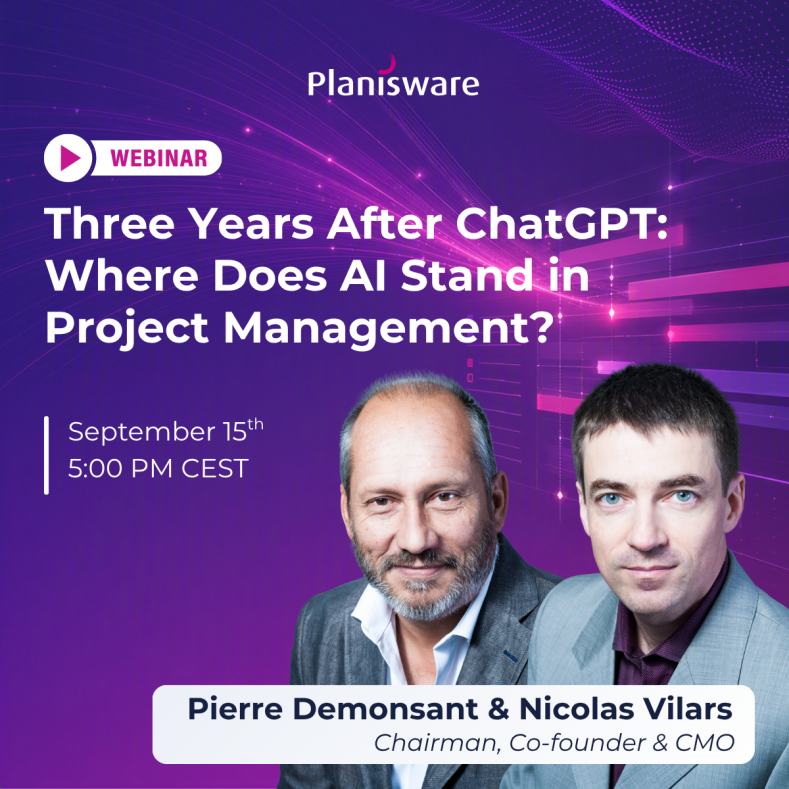
One year after our first AI survey, and over three years after the ChatGPT moment, organizations are still struggling to move AI beyond isolated productivity gains and scale it across the company. AI alone is not a magic wand: building meaningful use cases and playbooks takes far more than firing up a chatbot. Organizations need to rethink entire workflows, how they operate, and the tools they rely on. Some are already pulling ahead of the pack.
Enterprise Project Management Offices (PMOs) can fund agile portfolios without giving up financial control, provided they redesign the controls instead of relaxing them. The tension is familiar. The organization expects agile delivery, while finance expects annual budget discipline. Treating them as competing forces is the conventional response, yet they can be aligned.
As organizations face growing pressure to justify every technology investment, we wanted to address a persistent gap: most ROI models are generic and disconnected from the capabilities that actually generate financial impact. This guide was designed to anchor the calculation in the operational drivers of value creation and provide you with a credible, defensible business case rather than a set of optimistic assumptions.
Enterprise Project Management Offices (PMOs) face a persistent challenge. They must translate board-level strategy into funded, resourced and measurable execution across large portfolios.
This guide walks through a structured process in 6 steps. It covers defining roadmap objectives and stakeholder needs, then selecting and piloting the right tool tier. It closes with the governance habits that keep a portfolio aligned as priorities shift.
Managing Agile Release Trains well is the difference between scaled agile that produces strategic outcomes and scaled agile that produces noise. For enterprise Project Management Offices (PMOs), the challenge is clear. Coordinate multiple teams, protect delivery cadence and connect execution to portfolio strategy, without reverting to command-and-control habits.




![[illustration] Enterprise PMOs](/sites/default/files/styles/media_large/public/2026-09/top-ppm-vendors-for-enterprise-pmos.png?h=197483aa&itok=YEQoHuTE)
![[illustration] Enterprise PMOs](/sites/default/files/styles/max_789_x789/public/2026-09/top-ppm-vendors-for-enterprise-pmos.png?h=197483aa&itok=nOyaC5mj)



![[Illustration] 5 outils à évaluer](/sites/default/files/styles/media_large/public/2026-09/top-5-outils-ppm-a-evaluer.png?h=197483aa&itok=xw9MvOha)
![[Illustration] 5 outils à évaluer](/sites/default/files/styles/max_789_x789/public/2026-09/top-5-outils-ppm-a-evaluer.png?h=197483aa&itok=aOzNlIbT)