Enterprise Project Management Offices (PMOs) can fund agile portfolios without giving up financial control, provided they redesign the controls instead of relaxing them. The tension is familiar. The organization expects agile delivery, while finance expects annual budget discipline. Treating them as competing forces is the conventional response, yet they can be aligned.
Managing Agile Release Trains well is the difference between scaled agile that produces strategic outcomes and scaled agile that produces noise. For enterprise Project Management Offices (PMOs), the challenge is clear. Coordinate multiple teams, protect delivery cadence and connect execution to portfolio strategy, without reverting to command-and-control habits.
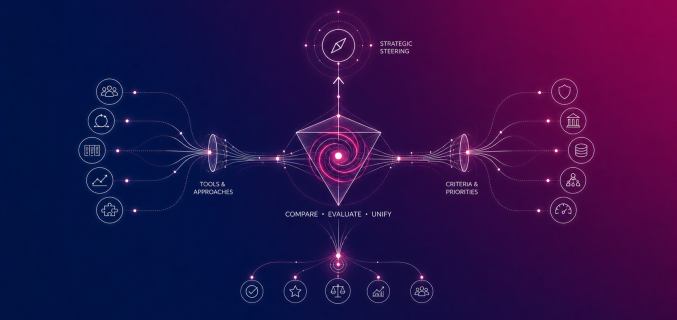
Scaling Scrum beyond a single team changes coordination, dependencies and governance for a Project Management Office (PMO). When Scrum works at the team level, organizations want to extend its benefits across programs and portfolios. Those benefits include frequent releases, continuous feedback and cross-functional ownership. The move from 1 team to many creates coordination challenges, dependency risks and governance questions that single-team Scrum never had to answer. This playbook gives PMO leaders a structured, comparative evaluation of frameworks, governance models and implementation approaches. Use it to match the right path to your organization's size, maturity and strategic context.
Organizations increasingly struggle to align skilled teams with strategic priorities while maintaining agility. An integrated agile resource management solution answers that challenge.
Enterprises increasingly adopt the Scaled Agile Framework (SAFe) to coordinate hundreds of teams and deliver value faster. Many discover that their existing project management tools fall short. Research shows that SAFe implementations frequently stall due to inadequate planning support, poor cross-team visibility and fragmented coordination mechanisms.
For enterprises navigating digital transformation, agile roadmap tools have become a cornerstone of strategic execution. These platforms help organizations align long-term business goals with iterative delivery cycles, offering the visibility and adaptability leaders need in a volatile market.
Agile resource and capacity management platforms have become essential for organizations that must continuously realign teams, budgets and priorities in rapidly changing markets. These systems help enterprises dynamically balance people, skills and financial resources against evolving portfolios of agile initiatives.
Jira is a common agile tool for software teams, but enterprises scaling agile across dozens or hundreds of teams often encounter limits. Administrative overhead, rising license costs, plugin fatigue and a steep learning curve for non-technical users are common friction points. For organizations looking for enterprise alternatives to Jira for scaled agile, the market includes a range of options, from lightweight developer tools to portfolio management platforms.
Agile sprint planning has evolved from a simple team exercise into a cornerstone of cross-departmental coordination. With distributed workforces, hybrid teams and enterprise-level dependencies, organizations now rely on digital tools to do more than plan sprints. These platforms synchronize strategies, automate workflows and visualize progress across business and IT. Choosing the right one can make the difference between fragmented execution and cohesive delivery.
Managing dozens or hundreds of agile projects at once is no small task. Enterprises need more than team-level task boards. They need platforms that connect strategy, execution and financial governance across multiple portfolios.
PI (Program Increment) Planning is a cadenced alignment event, often called the heartbeat of the Agile Release Train. All teams on an ART synchronize on a shared mission, commit to objectives and map cross-team dependencies for the upcoming increment. As organizations scale to multiple ARTs, manual sticky-note boards and spreadsheets break down.
As organizations scale agile beyond individual teams, the choice of enterprise agile planning software becomes strategic. It shapes portfolio governance, cross-ART coordination and execution visibility. Whether you are implementing SAFe, LeSS or a hybrid scaling framework, the right platform must align strategy to delivery. It also needs solid integrations into the tools your teams already use.
Selecting a single platform to manage multiple Agile projects can unify processes, reduce reporting overhead and strengthen portfolio visibility. This matters most for enterprises coordinating dozens of delivery teams.
Delivering customer value swiftly and reliably is the cornerstone of Agile. Yet many organizations stall not from lack of talent or tools but from poor flow. In Agile environments, flow refers to the uninterrupted movement of work from idea to delivery with minimal waste, waiting or friction. When flow is strong, teams deliver faster, improve predictability and reduce burnout. When it is weak, bottlenecks multiply and momentum fades.
Coordinating work across multiple Agile teams can feel like balancing many moving parts at once. Dependencies are the connections between tasks, teams or systems. They can slow delivery, introduce risk and obscure progress. Managing them well is one of the toughest challenges in enterprise Agile planning.
In large organizations, coordinating several Agile teams demands more than synchronized sprints: it requires visibility, consistency and alignment around outcomes. Tracking Agile metrics across multiple teams helps leaders connect day-to-day delivery with strategic goals such as faster time-to-market or improved customer satisfaction.
In today's dynamic environment, enterprises need portfolio operations that can adapt as quickly as markets do. Transparent agile portfolio operations provide a clear view of how strategies, funding and execution connect.
Executives invest heavily in agile transformations expecting faster, more reliable delivery. Many enterprises still struggle to translate team-level agility into portfolio-level forecasting confidence.