Enterprise product development demands more than task tracking and team collaboration. Your portfolio may span multi-year research and development (R&D) programs, regulated stage-gate processes and cross-functional engineering workstreams. At that scale, the software you choose must connect strategy to execution across the organization.
Product portfolio optimization is the practice of managing every product in an organization's lineup as a single governed investment. Enterprise Project Management Office (PMO) leaders evaluate each product's financial performance, strategic fit and resource demands. The goal is to maximize return on investment (ROI), remove redundancy and keep the portfolio aligned with changing business objectives.
Most transformation offices face the same problem. Dozens of change initiatives run across divisions, each tracked in its own spreadsheet, slide deck or point tool. No one sees the full picture.
Scaling Agile beyond individual teams requires tooling that connects strategic intent to delivery across every value stream. Lean portfolio management tools exist for this purpose.
When project requests arrive from 20 or more business departments, portfolio governance breaks down fast. Requests come in through emails, chat threads, hallway conversations and vendor-driven escalations.
If you lead IT in a service-oriented organization, your portfolio rarely looks like a textbook project list. You manage digital transformation programs, application support services, infrastructure upgrades and regulatory initiatives.
Project delays rarely announce themselves. They build quietly: an approval that lingers, a dependency nobody noticed, a specialist stretched across too many initiatives. By the time these issues reach a status meeting, the damage is already moving through the schedule.
Professional services automation (PSA) software unifies project delivery, resource management, time tracking, billing and client collaboration in a single operational platform. In 2026, the most capable PSA platforms embed AI-driven resource allocation. They match consultants to engagements, forecast capacity gaps and can execute staffing decisions without manual intervention.
Planisware, a leading provider of B2B AI-powered SaaS platforms serving the rapidly growing Project Economy, today announced a major expansion of its global partner strategy, including the establishment of a dedicated global partner organization and the launch of new partner programs.
Most professional services firms still treat consultant utilisation as a number calculated after the fact. It appears in the monthly finance review, weeks after the staffing decisions that shaped it. In 2026, that approach no longer holds. Talent scarcity, compressed delivery timelines and client demands for transparency turn utilisation into a real-time operational metric: forecasted, visible and actionable.
Engineering projects rarely drift off plan in one dramatic moment. Schedule slippage, cost overruns and scope creep build quietly across disciplines. They often surface in a monthly report, once the options for a measured response have narrowed. The root cause is rarely a lack of data. It is the inability to turn that data into a usable signal fast enough. Traditional project controls rely on periodic, manually reconciled reporting cycles, which makes variance detection a retrospective exercise.
Most projects experience some form of schedule slippage. Poor scope definition, resource overallocation and missed dependencies are the usual causes. Traditional risk management relies on periodic workshops, static registers and quarterly reviews. That rhythm cannot keep pace with how quickly modern projects evolve.
Enterprise Project Management Offices (PMOs) face a clear choice in 2026. They can remain administrative gatekeepers, or they can become the engine that connects investment decisions to business outcomes. Which path a PMO takes depends on how well the organisation practises strategic programme management.
Your portfolio held 40 projects 3 years ago. Today it holds 400. Somewhere along the way, spreadsheets stopped working, resource conflicts multiplied and leadership lost confidence in the numbers.
Most enterprise Project Management Office (PMO) leaders know the frustration. Teams complete epics on time in Jira or Azure DevOps (ADO). Yet executives still struggle to answer a simple question: are we funding the right work?
Many services organizations still run resource planning in spreadsheets. Leaders toggle between tabs, chase availability updates over email and reconcile billing data by hand at month-end.
The way organizations fund work is changing. Traditional project-by-project budgeting relies on rigid annual cycles, siloed approvals and a focus on deliverables over outcomes.
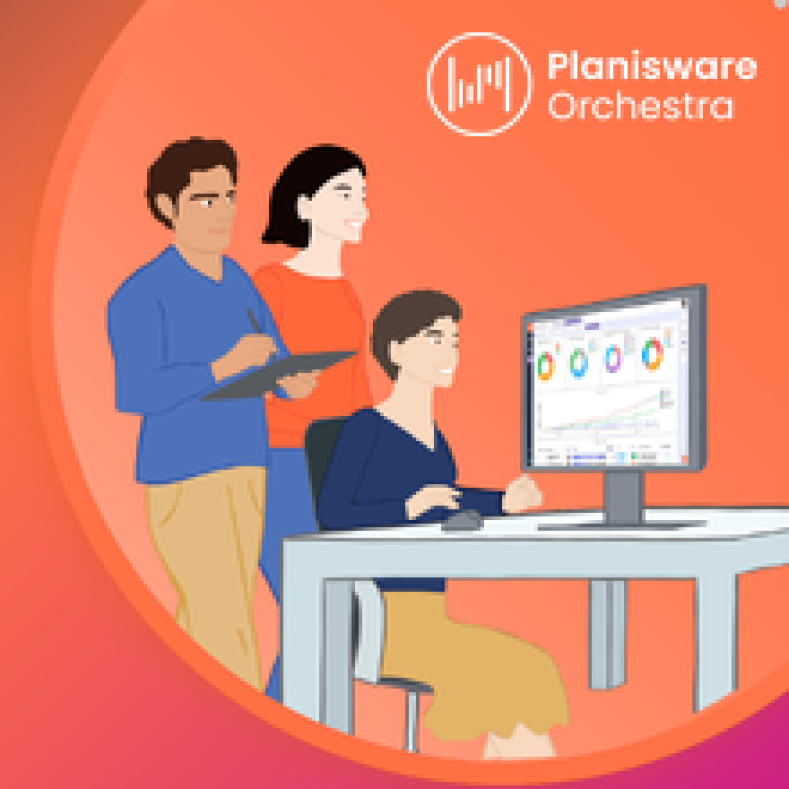
Download the brochure to discover Planisware Orchestra turnkey Project Portfolio Management (PPM) platform designed for PMOs that need immediate results and room to grow.
The best project management methodology for UK teams depends on requirements stability, delivery risk and stakeholder needs. Waterfall supports predictable work; Agile supports learning through incremental delivery. PRINCE2 adds structured governance, while hybrid approaches combine controls with adaptable execution. Confirm resource availability before committing to deadlines, whichever approach you choose.
This guide covers centralised intake, evidence-based prioritisation and governance automation. It provides evaluation criteria, a buying checklist and a practical proof of concept.





![[illustration] Enterprise PMOs](/sites/default/files/styles/media_large/public/2026-09/top-ppm-vendors-for-enterprise-pmos.png?h=197483aa&itok=j7VOszH4)
![[illustration] Enterprise PMOs](/sites/default/files/styles/max_789_x789/public/2026-09/top-ppm-vendors-for-enterprise-pmos.png?h=197483aa&itok=Xg4zhqUQ)





















![[illustrations] tendances marché PPM](/sites/default/files/styles/media_large/public/2026-08/marche-des-logiciels-ppm-2026-tendances-acteurs-majeurs.png?h=197483aa&itok=mXb5lN_M)
![[illustrations] tendances marché PPM](/sites/default/files/styles/max_789_x789/public/2026-08/marche-des-logiciels-ppm-2026-tendances-acteurs-majeurs.png?h=197483aa&itok=5yAfBx0K)